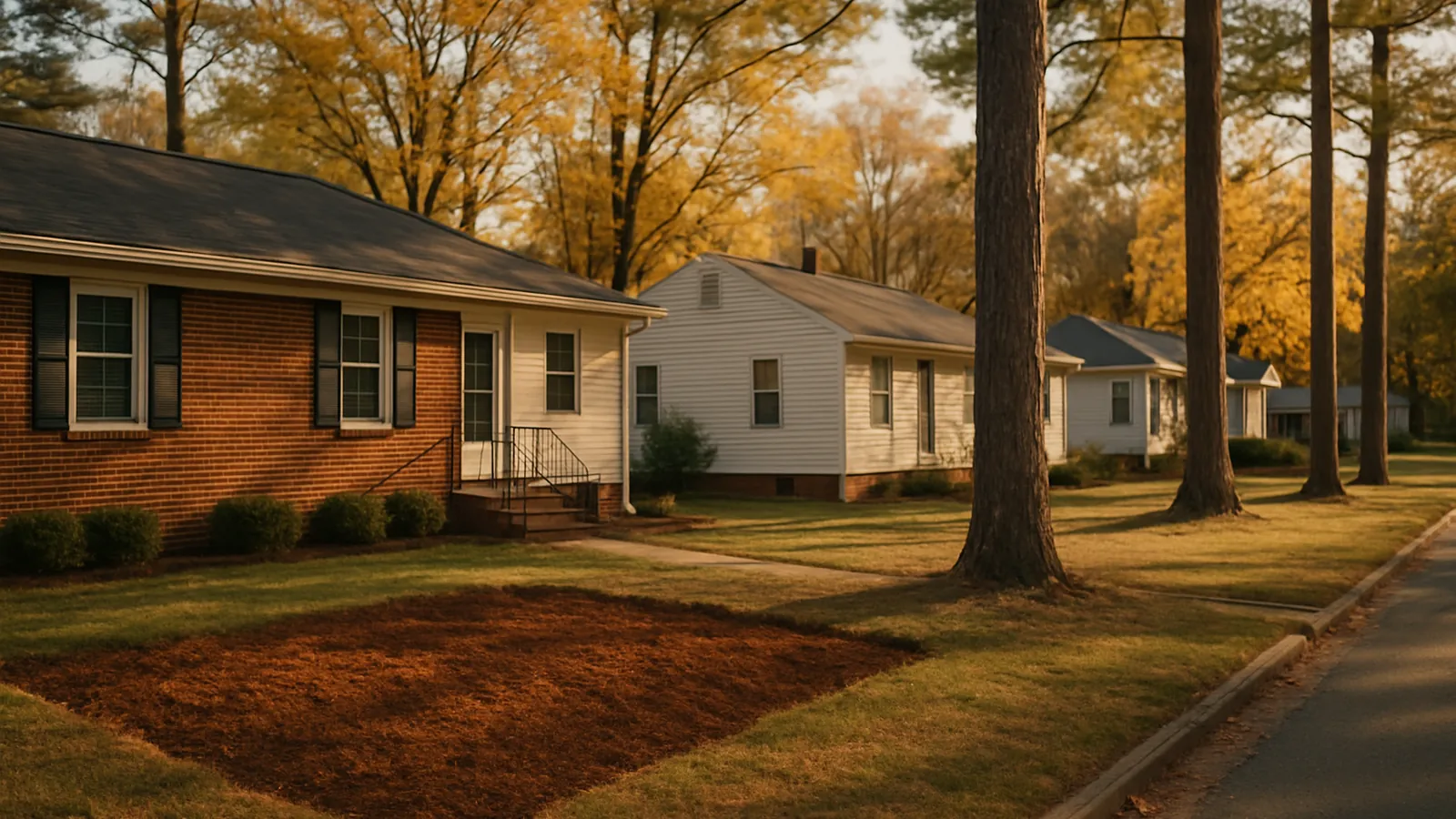
Wilmington Mold Removal Co. covers Wilmington plus Leland, Hampstead, Carolina Beach, Wrightsville Beach, Castle Hayne, Ogden, Porters Neck, Southport, and Wilmington Beach — inspections across all of them, and it is worth asking about any travel charge up front.
LelandHampsteadCarolina BeachWrightsville BeachCastle HayneOgdenPorters NeckSouthportWilmington Beach
Every town we cover, and what changes there
Each of these has its own page, because the ground and the housing stock are not the same across the region. The short version:
Leland — New construction on low ground
Leland has absorbed an enormous share of the region’s growth, and much of it went up on land that sits low and drains slowly. Read what that means for a Leland property.
Hampstead — Rural lots, uncontrolled water
Hampstead spreads across larger properties where storm water goes wherever the land sends it. Read what that means for a Hampstead property.
Carolina Beach — Where eighteen inches fell in one event
Carolina Beach recorded roughly 18 inches of rain during the September 2024 system that hit this coast — the highest total tied to that event. Read what that means for a Carolina Beach property.
Wrightsville Beach — The dirt crawl space problem, concentrated
Wrightsville Beach carries a stock of older homes standing on crawl spaces with bare ground — and on a barrier island, that ground sits close to the water table and never truly dries. Read what that means for a Wrightsville Beach property.
Castle Hayne — River-adjacent, water table high
Castle Hayne sits along the Northeast Cape Fear River, and proximity shows up in the ground water. Read what that means for a Castle Hayne property.
Ogden — Slab housing has its own signature
Ogden is largely newer suburban development, and slab-on-grade construction fails differently than the crawl space stock closer to the water. Read what that means for an Ogden property.
Porters Neck — Good houses, coastal conditions
Porters Neck is newer construction and generally well built, which is exactly why calls from here surprise owners. Read what that means for a Porters Neck property.
Southport — Old houses, full coastal exposure
Southport’s historic core is old by any standard, and those assemblies were built to breathe: permeable materials, generous ventilation, no vapor barriers anywhere. Read what that means for a Southport property.
Wilmington Beach — Cottage stock, decades of salt
Wilmington Beach carries small older beach housing — cottages built simply, raised on piers, and exposed to salt air for decades. Read what that means for a Wilmington Beach property.
Four different coasts in one service area
The islands — Carolina Beach, Wrightsville Beach, Wilmington Beach — are pier construction over sand near the water table, with salt air moving through constantly and rental turnover that hides moisture history for seasons at a time. Carolina Beach took roughly eighteen inches of rain in the September 2024 event. The historic core — downtown Wilmington and Southport — carries genuinely old assemblies built to breathe, now retrofitted with central air, which creates cool surfaces inside walls that have no drying path.
The new growth — Leland, Ogden, Porters Neck — is tight modern construction on low or coastal ground, where oversized air conditioning satisfies the thermostat without removing moisture and the house runs cool and damp. The river and rural edges — Castle Hayne, Hampstead — sit on a high water table with little or no engineered storm drainage, so ditches, culverts, and lot contours decide whether a heavy rain leaves the property.
Three constants across all ten
No dry season. Roughly 58 inches of rain a year in a humid subtropical climate means outside air will not dry a crawl space for you at any point in the calendar. Mechanical drying does the work here.
Salt. It is hygroscopic — it holds moisture on the surfaces it settles on — so framing near the water carries more moisture than an ambient reading suggests, and metal connectors corrode faster than inland equivalents. A good inspection reads metal as well as wood.
No state license. North Carolina certifies nobody for mold work, coast-wide. Whoever you hire, ask what written standard they follow and ask to see the moisture readings behind the scope.
What mold removal costs across the coast
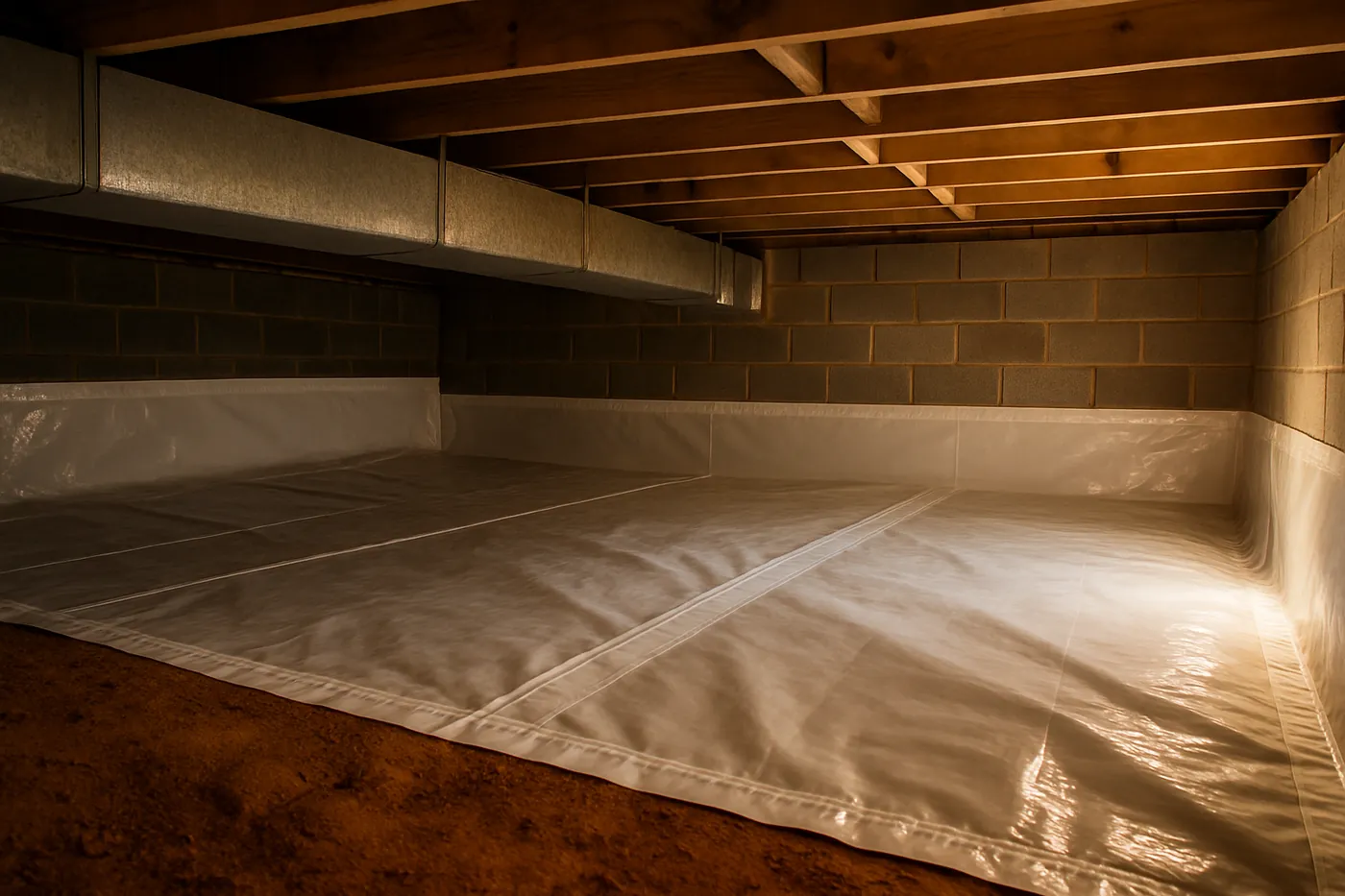
Pricing does not change by town. Remediation runs $1,500–$6,000, crawl space work with sealed ground and drying $2,500–$9,000, attics $1,500–$5,000, and HVAC systems $1,000–$4,000 whether the house is in Southport or Ogden. What changes is which one you need, because the water arrives differently in each community. The cost guide breaks every class out, and the inspection tells you which one you are in.
Cost note
Service area questions
Is travel extra for towns outside Wilmington?
The ten communities listed here, across New Hanover, Brunswick, and Pender counties, are normal service area. Ask about any travel charge when the specialist calls, and ask to see it as its own line.
Which county is the service area based around?
New Hanover County is the center of the service area, with Brunswick (Leland, Southport) and Pender (Hampstead) covered as well. Many local specialists don't charge for the inspection; ask when they call.
Is the mold problem worse in some of these towns?
The mechanism is identical valley-wide - ground that sits near a high water table - but how the water reaches the house differs. Newer areas fail at settled grade, rural areas at driveways and culverts, mountain-base areas at runoff and a rising water table, river towns at a permanently damp ground condition.
How fast can someone reach my town?
Anywhere across all ten, a local specialist calls you back to set a time. How soon depends on their schedule. If water is coming in right now, call (910) 994-2131. Buying? Mention your closing date when the specialist calls.
What it means when we say we cover a town
It means your request goes to one independent local specialist who serves that town, the same as in Wilmington. Ask for moisture readings, photographs of what is growing, and a written scope afterwards, with any travel charge as its own line rather than buried inside the others. If travel is material, ask for that number before you agree to anything.
Damp problems get worse while they wait, so distance never becomes a reason to put a visit off.
These 9 communities are the ones these pages know well enough to describe the ground before anyone arrives. That is the honest boundary: not a radius drawn on a map, but the places covered in enough detail here to recognise what is going on.
Get a Wilmington mold inspection
Tell us what you’re seeing — a musty smell near the floor, dark streaks on attic sheathing, staining on a wall, water standing against the foundation — and we'll pass it to one independent local specialist. A good inspection goes into the crawl space and the attic. A local specialist who serves Wilmington will call you back.